

Manufacturers struggle with slow, inefficient surface treatment processes, leading to delays, high labor costs, and inconsistent product quality. Finding a solution that increases productivity while maintaining surface standards is crucial.
A roller conveyor shot blasting machine streamlined operations for a manufacturing company, resulting in a 30% increase in production efficiency by reducing cleaning times, improving consistency, and lowering operational costs.
This case study explores how implementing a roller conveyor shot blasting machine transformed an industrial production line.
Understanding Roller Conveyor Shot Blasting Machines
Manufacturing industries require efficient surface cleaning to remove rust, scale, and coatings before painting or welding. Traditional methods, such as manual grinding, are labor-intensive and inconsistent.
A roller conveyor shot blasting machine automates the surface treatment process by using high-speed steel shots to clean and prepare metal surfaces efficiently.
How Does It Work?
- Loading – Workpieces are placed onto the conveyor belt.
- Blasting Chamber – Multiple blast wheels propel abrasive media at high velocity, removing impurities.
- Abrasive Recovery – Used media is collected, cleaned, and reused.
- Dust Collection – A filtration system removes dust and contaminants.
- Finished Surface – Cleaned metal emerges ready for coating or further processing.
Industries That Benefit
| Industry | Application |
|---|---|
| Automotive | Prepares chassis, frames, and engine parts. |
| Construction | Cleans steel beams and structural components. |
| Shipbuilding | Removes rust from large metal plates. |
| Steel Fabrication | Enhances surface adhesion for coatings. |
Case Study: Challenges Faced Before Implementation

A mid-sized steel fabrication company faced multiple production bottlenecks due to outdated cleaning methods.
Key Problems Before Shot Blasting Implementation:
- Inefficient Cleaning – Manual and chemical cleaning methods were slow and inconsistent.
- High Operational Costs – Labor-intensive processes increased costs and errors.
- Quality Control Issues – Uneven surface preparation led to coating failures.
- Production Delays – Slower cleaning cycles impacted delivery timelines.
Company Overview
- Industry: Steel Fabrication
- Production Scale: 10,000+ metal components per month
- Challenges: Slow surface treatment, high costs, inconsistent quality
Implementing the Roller Conveyor Shot Blasting Solution
To address these challenges, the company invested in a high-performance roller conveyor shot blasting machine.
Selection Process
- Compared multiple cleaning solutions: manual blasting, chemical treatment, and automated shot blasting.
- Chose roller conveyor shot blasting for its speed, automation, and cost-effectiveness.
Installation & Integration
- Minimal Downtime: The new system was installed over a weekend.
- Operator Training: Employees were trained in automated control systems.
- Customization: Adjustments made to accommodate specific metal sizes.
Key Results & Performance Improvement
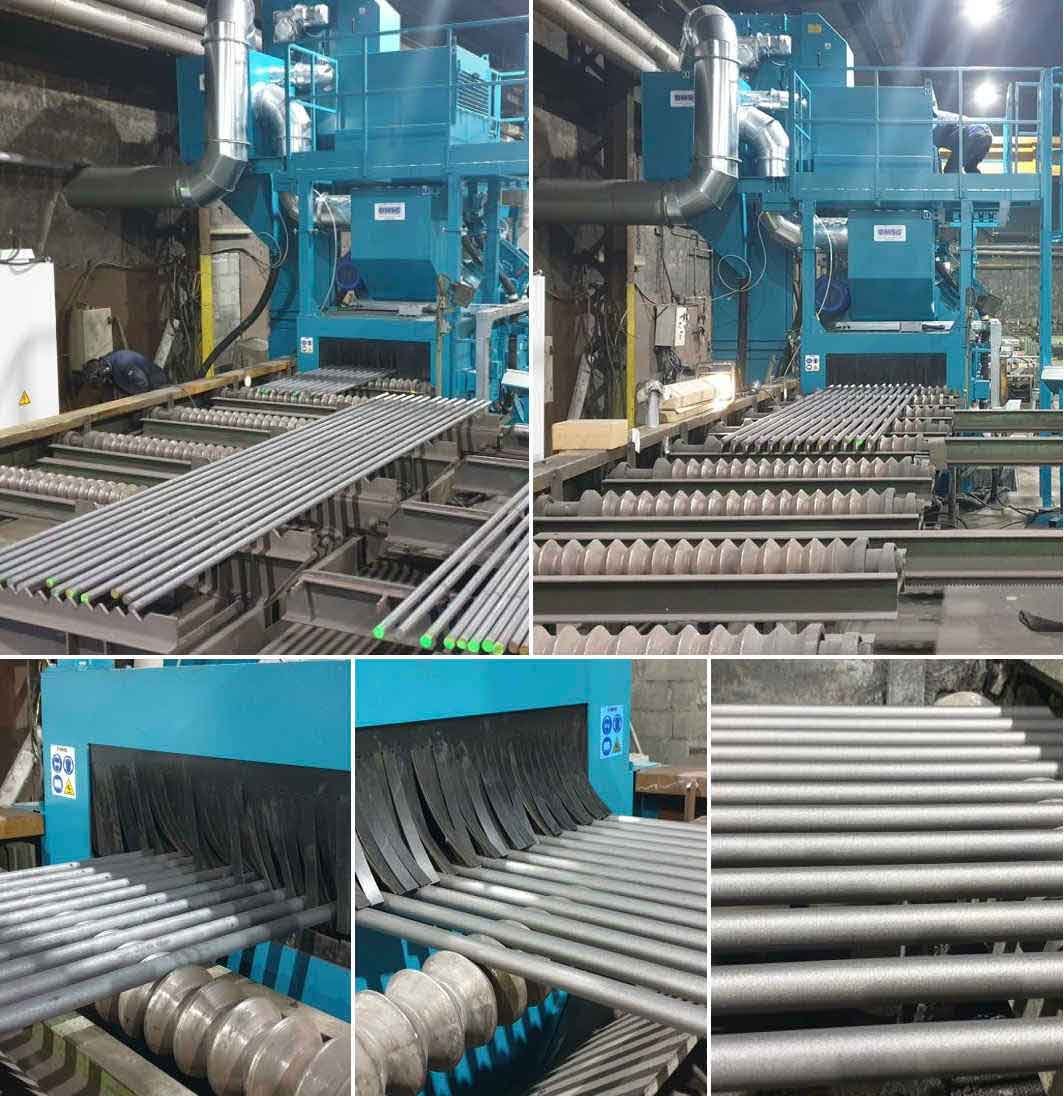
The implementation of the roller conveyor shot blasting machine led to measurable improvements.
Efficiency Gains
| Performance Metric | Before | After | Improvement |
|---|---|---|---|
| Cleaning Time | 20 minutes per unit | 10 minutes per unit | 50% faster |
| Production Output | 500 units/day | 650 units/day | 30% increase |
| Labor Costs | High (manual work) | Lower (automated) | Reduced by 25% |
| Surface Quality | Inconsistent | Uniform & high quality | Enhanced adhesion |
Key Benefits Achieved
- Faster Cleaning Cycles – Workpieces processed in half the time.
- Reduced Material Handling – Automated conveyor reduced manual labor.
- Improved Surface Quality – Consistent shot impact enhanced adhesion.
- Lower Labor Costs – Fewer workers required for surface treatment.
- Reduced Maintenance – Efficient abrasive recycling minimized wear.
Additional Benefits Observed
Beyond efficiency gains, the company experienced additional advantages.
Environmental Impact
| Factor | Before | After |
|---|---|---|
| Abrasive Waste | High | 60% Reduction |
| Dust Emissions | Uncontrolled | Filtered & Captured |
| Energy Usage | High (manual equipment) | Optimized (automated system) |
- Lower Abrasive Waste: Advanced recovery system reduced waste.
- Cleaner Air: Dust collectors improved air quality in the facility.
- Energy Efficiency: Automated systems consumed 15% less energy than manual methods.
Financial & Scalability Benefits
- Faster ROI: Machine paid for itself within 18 months due to cost savings.
- Scalability: System was designed to handle increased production demand.
Lessons Learned & Best Practices for Other Manufacturers
For companies considering shot blasting upgrades, here are key takeaways:
Lessons from the Case Study
- Customization is Key – Select a machine that matches your production needs.
- Automation Saves Costs – Reducing manual handling improves efficiency.
- Maintenance Matters – Regular upkeep ensures consistent performance.
- Operator Training Boosts Results – Well-trained staff maximize machine benefits.
How to Choose the Right Shot Blasting Machine
| Factor | Consideration |
|---|---|
| Material Type | Steel plates, beams, pipes, or profiles? |
| Production Volume | High-speed conveyor needed? |
| Cleaning Standard | Required surface roughness (SA 2.5, SA 3)? |
| Automation Level | Manual vs. PLC-controlled system? |
Conclusion
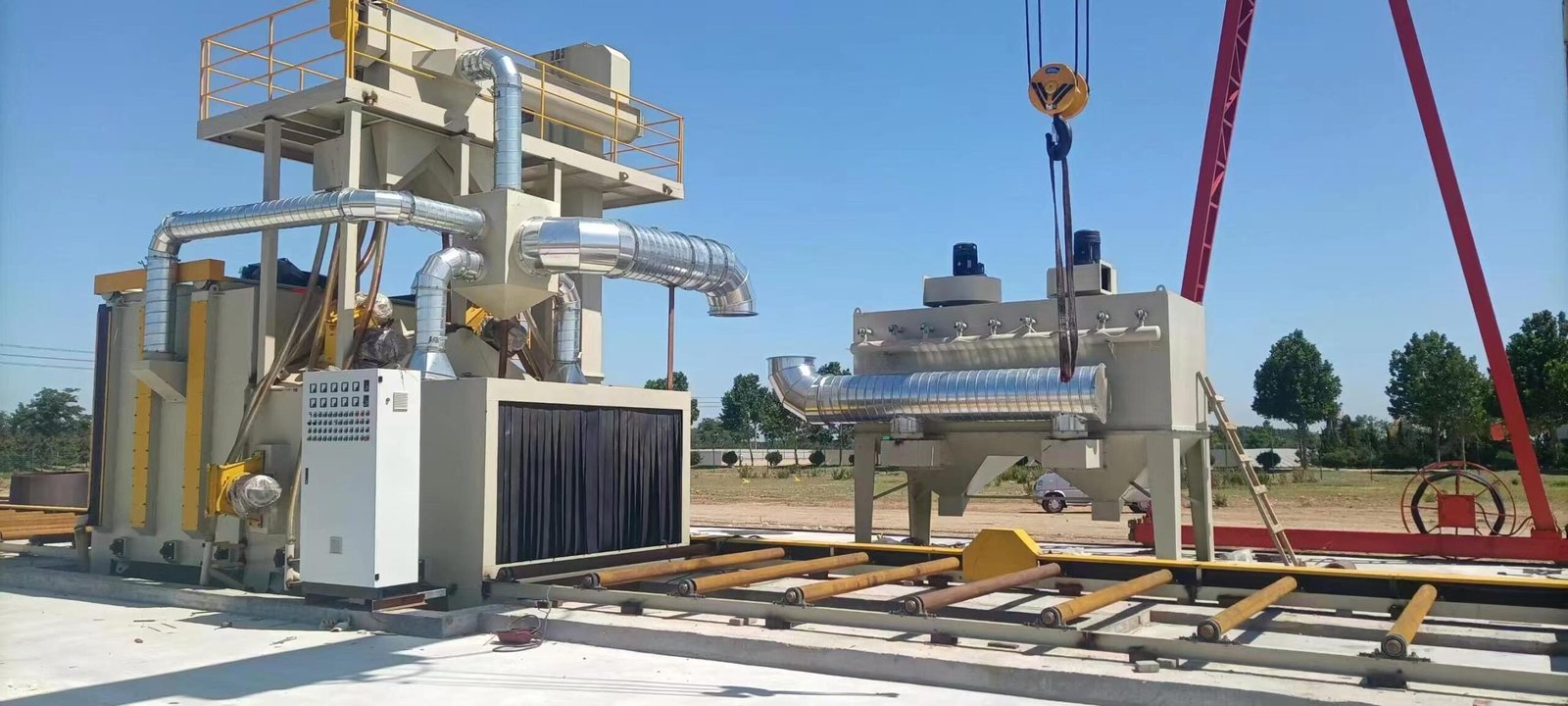
The adoption of a roller conveyor shot blasting machine significantly improved the company's production efficiency by 30%, reducing labor costs, increasing cleaning speed, and enhancing surface quality.
Manufacturers looking to improve efficiency, quality, and cost-effectiveness should explore automated shot blasting technology to stay competitive in today's market.


