
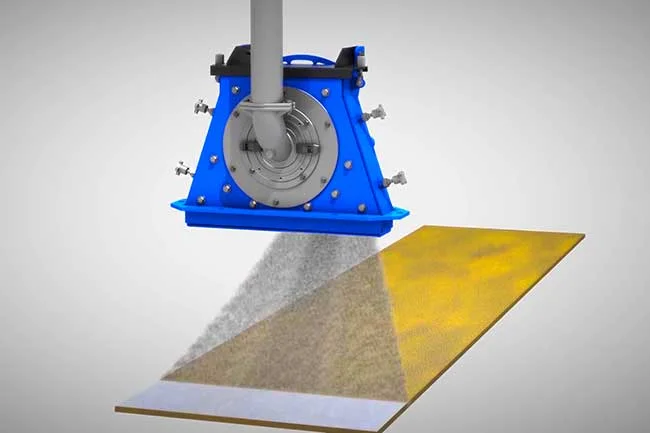
A pass-through shot blasting line moves suitable steel plates or profiles through a blasting chamber on a defined handling system, often a roller conveyor. It can be evaluated for repeated surface preparation when workpiece range, required finish and production flow are compatible.
How the Line Works
The workpiece is loaded, conveyed through the approved blast zone and unloaded through the specified sequence. Abrasive recovery and separation support reuse where the system is designed for it. Extraction and containment address process emissions and abrasive escape.
Incoming oil, moisture or other contamination may require separate preparation. Preheating or flame treatment is not a universal rust-cleaning step and should not be added without process and equipment qualification.
Define Surface Acceptance
Specify the required visual cleanliness, surface profile and contamination checks for the downstream process. Where a project calls for an ISO 8501-1 visual grade, use the applicable standard and agreed assessment; the machine's category does not guarantee that grade.
Visual cleanliness and profile are different characteristics. Blasting alone does not guarantee coating adhesion, galvanizing suitability, weld quality or longer product life. The complete preparation and downstream process must meet its requirements.
Assess Workpiece and Coverage Limits
| Item | What to review |
|---|---|
| Envelope | Plate width, section height, length and clearance |
| Load | Mass, support, distribution and conveyor limits |
| Geometry | Flanges, recesses, overlap and contact areas |
| Surface | Incoming scale, coatings and contamination |
| Handling | Loading, spacing, transfer and abrasive removal |
Multiple wheels do not automatically clean every surface. Wheel placement, abrasive flow, workpiece orientation and conveyor speed must be qualified together. Complex or hidden areas may require additional treatment.
Compare Capacity on a Defined Basis
State the product mix, incoming condition, required result and complete operating boundary. Conveyor speed alone is not accepted tonnage per shift. Include loading, gaps, changeovers, maintenance and downstream constraints.
Compare alternative preparation routes against the same final requirement. Do not assume a pass-through line always has the lowest cost or that manual and open-blast methods are inherently unable to meet a specification.
Review Installation and Protection
Plan foundations, utilities, extraction, abrasive handling, access and interfaces with adjacent lines. Review workpiece transfer, moving parts, containment and required protective functions.
Evaluate dust and noise for the actual installation and materials. A filter system does not establish workplace compliance by itself. Maintain extraction and safeguards through their documented checks.
Specify Maintenance and Acceptance
Provide safe access to liners, wheels, seals, conveyors and recovery equipment. Use the manufacturer's wear limits and maintenance instructions. Proposed abrasive or speed changes require a review of equipment compatibility and surface acceptance.
Agree on representative trials before purchase and verify the installed process before release. Record settings, inspection results and limitations. Any cost, output or rework forecast should use explicit assumptions; unsupported percentage savings and guaranteed international-standard performance are not substitutes for evidence.
Hitech Configuration Parameters and Selection Inputs
Provide these inputs so the proposed machine can be defined around the actual workpiece, treatment and production requirement.
| Parameter | Available configuration options | Selection condition |
|---|---|---|
| Working width | 600–3,000 mm configuration classes | Select the clear opening around the actual plate/profile range. |
| Blast-wheel quantity | 4 / 6 / 8 wheels | Choose wheel positions and quantity for workpiece faces and coverage. |
| Power per blast wheel | 7.5 / 11 / 15 / 18.5 kW options | Select the wheel package; total installed power includes other drives. |
| Working travel speed | 0.5–3 m/min configuration range | Set and qualify the working speed for incoming surface and required finish. |
| Abrasive system | Recovery conveyor, elevator and separator; media grading and flow selected for duty | Confirm compatible shot/grit, carry-out removal and separator conditions. |
| Dust / controls | Extraction system and PLC control package configured for the installation | Confirm air duty, motor list, interfaces and operating safeguards. |
For H-beams and welded steel structures, check flange faces, webs, recesses and roller contact points separately. A plate-line width alone does not establish coverage of a structural assembly.
These are configurable equipment classes, not a promise that every combination is interchangeable. The quotation confirms the selected machine, motor list, workpiece limits and accepted process window.


