
Abrasive selection should align the workpiece, required surface condition and approved equipment configuration. Compare media through representative trials and complete operating costs. No abrasive is universally best for an industry, substrate or production volume.
Define the Treatment Objective
Identify whether the task is cleaning, coating preparation, cosmetic finishing or a separately qualified peening process. Specify cleanliness, profile, dimensional protection and contamination limits as applicable.
Cleaning and peening have different acceptance requirements. A material described as shot does not automatically create a qualified fatigue-performance benefit, and a cosmetic finish is not proof of coating readiness.
Check Equipment Compatibility
Review the manufacturer's permitted abrasive types and size range. Assess wheel or nozzle, flow path, liners, separators and extraction. A media change may affect more than the surface result.
Do not place an abrasive in equipment merely because it passes through an opening. Density, shape, hardness, breakdown and contamination behavior affect the complete system. Proposed changes need the appropriate technical review.
Compare Media Characteristics
| Characteristic | Why it matters |
|---|---|
| Composition | Substrate compatibility and contamination |
| Shape | Surface interaction and resulting texture |
| Size distribution | Access, flow and the working mix |
| Hardness and toughness | Interaction with substrate and equipment |
| Breakdown behavior | Fines, replenishment and collection load |
| Reuse suitability | Separation and quality control in the actual system |
Steel shot and grit, mineral abrasives, glass beads and plastic media have different properties and available grades. A category name alone does not specify the finish, removal rate or safe exposure. Plastic media is not inherently non-damaging, and a natural mineral label is not proof of environmental benefit.
Consider the Workpiece
Review alloy, hardness, thickness, sensitive features and existing contamination. Prevent incompatible material transfer where the product requires it. Protect areas that should not be treated.
Thin or soft components can be damaged by an unsuitable combination of abrasive and exposure. Do not prescribe glass beads, grit or plastic for every aluminum part without checking the actual requirement and equipment.
Run Representative Trials
Record abrasive grade and working condition, machine settings, orientation and incoming surface. Inspect difficult features and dimensional limits. Use the required measurement methods for profile and cleanliness.
Compare accepted output under the same boundary. A smoother or brighter appearance does not establish better mechanical performance, and more aggressive media does not guarantee better coating adhesion.
Manage the Working Mix
Inspect size distribution, contamination and separator function. Replenish according to the qualified process. Abrasive life is affected by duty and recovery; universal reuse-cycle tables can be misleading.
Review consumption, carryout, waste, equipment wear and utilities per accepted output. Purchase price per kilogram alone does not establish the least expensive process. Do not claim a fixed liner-life or customer-saving improvement without evidence.
Include Exposure and Waste Controls
Assess the abrasive together with the material being removed. Use suitable containment, extraction, work practices and task-specific protection. Silica-free media does not eliminate hazardous contaminants already on the workpiece.
Consider relevant dust, fire and explosion risks and the classification of waste. A standard filter or respirator recommendation cannot cover every operation. Retain the qualified abrasive specification and reassess material changes before production use.
Abrasive Selection Questions
Can the media family name alone select the abrasive?
No. Specify the actual grade and working condition, then review the workpiece, equipment compatibility and required surface result. A family label does not define the complete qualified process.
Can a cleaning abrasive be assumed suitable for shot peening?
No. Cleaning and a separately qualified peening process have different acceptance requirements. Media selection for peening must follow the applicable approved process rather than a cleaning recommendation.
When should an abrasive change be reviewed?
Review changes in material, grade, size distribution or working condition against the equipment and accepted process. Record the change and compare representative output before treating it as an equivalent replacement.
Does a lower abrasive purchase price establish a lower process cost?
No. Compare consumption, carryout, waste, equipment wear and utilities for accepted output under the same boundary. A purchase-price comparison alone does not establish a customer saving.
Prepare an Abrasive Review
Provide the workpiece material and surface requirement, equipment identity, current abrasive specification and working condition, and the observations to be reviewed. Submit Your Production Requirement with the relevant records. Use Engineering for the wider process review and Service & Parts for installed-equipment support.
Read Particle Shape Before Setting the Process
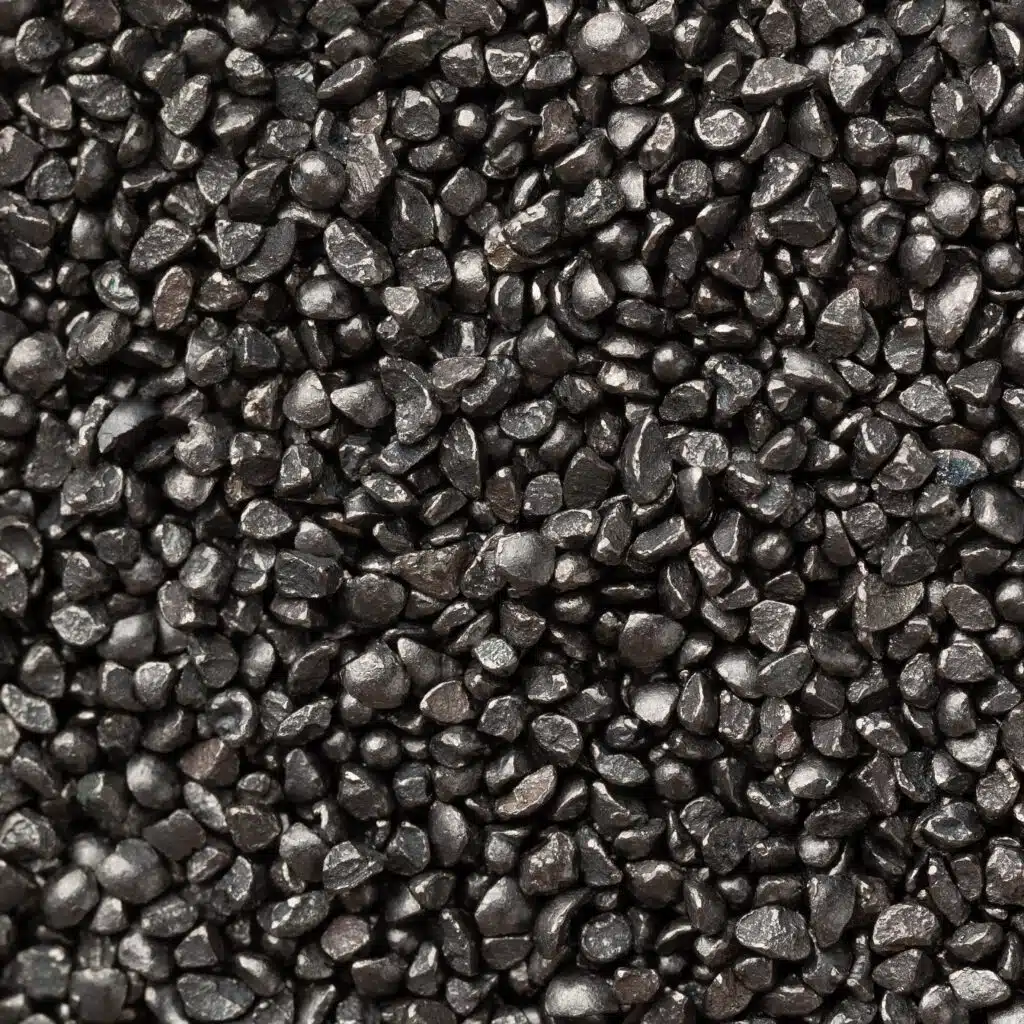
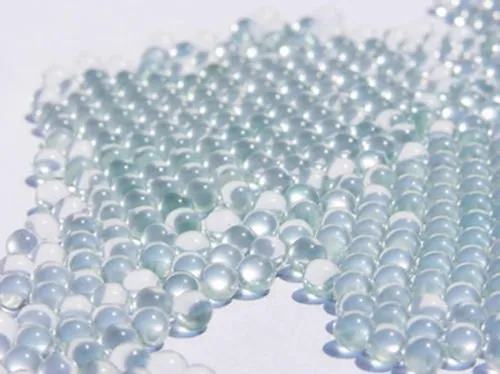
| Trial field | Record and compare |
|---|---|
| Media identity | Supplier, product designation, material, size distribution and hardness where specified. |
| Starting surface | Substrate, scale or coating condition, geometry and areas requiring treatment. |
| Machine setup | Wheel or nozzle configuration, media flow, exposure time and handling pattern. |
| Surface assessment | Specified cleanliness, profile and visual condition measured by the agreed method. |
| Working mix | Fresh additions, sampled distribution, carryout and separator settings over the trial. |
| Decision | Use the same acceptance basis and operating boundary for each media being compared. |
A close-up image cannot verify abrasive grade or size. Use the media specification and a representative process trial to select the working mix.


