

Struggling with rust, old coatings, or surface contamination on metal or plastic parts?
Sandblasting equipment uses compressed air to propel abrasive materials against surfaces for cleaning, smoothing, or etching, offering precision and versatility across industrial and restoration applications.
If you're looking for a flexible, controlled method to clean or texture surfaces without using harsh chemicals, sandblasting may be the solution. Let’s explore the equipment behind this powerful technique.
What Is Sandblasting?
Still using sand for blasting? You might be putting your health and finish quality at risk.
Sandblasting is a surface treatment process that uses high-pressure air to blast abrasive media onto a surface to clean, etch, or texture it.
The term "sandblasting" is often used generically, but modern systems rarely use actual sand due to silica dust hazards. Today, safer and more efficient abrasives—like aluminum oxide or crushed glass—have replaced sand in most applications.
Historically developed for cleaning ship hulls and castings, sandblasting now serves industries ranging from aerospace to fine art restoration.
How Does the Sandblasting Process Work?
Need pinpoint control for delicate cleaning? Sandblasting has you covered.
Sandblasting relies on compressed air to propel abrasive media through a nozzle, targeting surfaces for cleaning, polishing, or surface profiling.
Core Principles of Sandblasting
- Compressed air accelerates abrasive media
- Media exits the nozzle at high velocity
- Impact removes rust, scale, paint, or surface contaminants
- Can also roughen surfaces to prepare for coating adhesion
Applications range from heavy-duty rust removal on steel beams to etching logos into glass panels.
Basic Components of a Sandblasting System
| Component | Function |
|---|---|
| Blast Pot | Holds and pressurizes abrasive media |
| Air Compressor | Supplies high-pressure air (usually 90–120 PSI) |
| Blast Nozzle | Directs media with precision and velocity |
| Media Hose | Transfers abrasive from tank to nozzle |
| Dust Collector | Controls airborne particles and improves safety |
Sandblasting Equipment Overview
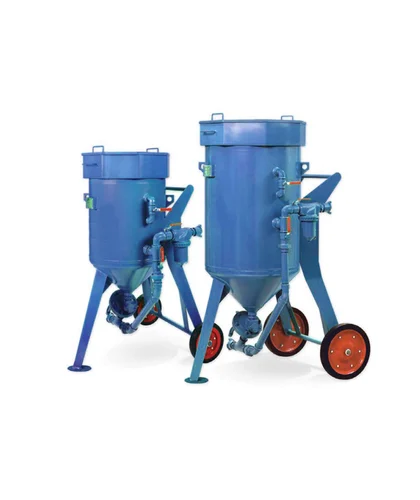
One size doesn’t fit all in abrasive blasting.
Sandblasting devices come in various types and configurations, each suited for specific tasks, surface types, and operating environments.
Sandblasting Compressor
Your air compressor is the heart of the system.
Ideal Specs:
- PSI: 90–120
- CFM: 20–100+ (depending on nozzle size)
- Tank Size: 60–120 gallons for continuous blasting
Without proper airflow, media delivery becomes inconsistent, reducing effectiveness and finish quality.
Types of Sandblasters
| Type | Description | Best For |
|---|---|---|
| Gravity-Fed | Media flows via gravity from a hopper | Small jobs, portability |
| Pressure-Fed | Media and air mixed under pressure | High-speed, aggressive cleaning |
| Siphon (Venturi) | Media drawn from a container by air suction | Economical for moderate use |
Each system balances speed, control, and cost. Pressure blasters are powerful but expensive; siphon systems offer flexibility at lower throughput.
Enclosed Systems for Sandblasting
For indoor, clean operations, go enclosed.
Blast Cabinets:
- Designed for small-to-medium parts
- Recycles media in closed loop
- Used in electronics, tooling, and auto parts
Blast Rooms:
- Built for large components (e.g., truck frames, turbines)
- Integrated dust recovery
- Requires operator PPE and air filtration systems
Specialized Equipment
- Wet Blasting Systems: Mix water with media to reduce heat and dust; ideal for temperature-sensitive or delicate parts
- Cryogenic Deflashing Units: Use cold blasting for plastic or rubber part finishing
- Media Recovery Systems: Automatically collect and recycle abrasives
Common Sandblasting Media and Their Applications
Media choice determines speed, safety, and surface finish.
The type of abrasive you use affects the cleaning power, environmental safety, and surface texture of your final product.
Media Comparison Table
| Media | Mohs Hardness | Typical Uses | Safety/Environmental Notes |
|---|---|---|---|
| Aluminum Oxide | 8–9 | Heavy-duty cleaning & etching | Reusable, sharp, low-dust |
| Crushed Glass | 5–6 | Paint removal, safe blasting | Non-toxic, recyclable |
| Soda (Bicarbonate) | 2.5 | Rust removal, soft cleaning | Safe on delicate surfaces |
| Steel Grit & Shot | 40–65 HRC | Aggressive stripping & profiling | High recyclability |
| Coal Slag | 6–7 | Shipyard blasting, tanks | Cheap but potentially hazardous |
| Staurolite | 7 | Rust/coating removal | Less toxic than slag |
| Walnut Shells | 3–4 | Polishing, electronics cleaning | Biodegradable, low hardness |
Factors for Choosing the Right Media
- Hardness: Determines aggressiveness
- Density: Influences impact energy
- Shape: Angular for cutting, round for polishing
- Size (Mesh): Finer mesh = smoother finish
Sandblasting vs. Shot Blasting: Key Differences

Still confusing sandblasting with shot blasting?
Sandblasting uses compressed air to project abrasives; shot blasting uses a motorized wheel.
| Feature | Sandblasting | Shot Blasting |
|---|---|---|
| Propulsion | Compressed Air | Centrifugal Wheel |
| Speed Control | Highly adjustable | Fixed by turbine speed |
| Precision | High (detailed parts) | Lower |
| Best For | Intricate, delicate jobs | Large, flat surfaces |
| Dust Output | Higher | Lower (enclosed system) |
| Portability | High | Low (stationary units) |
Use sandblasting when working on automotive panels, electronics, or sculpture. Use shot blasting for steel beams, rebar, or concrete slabs.
Benefits and Limitations of Sandblasting
Every process has trade-offs—here’s how sandblasting stacks up.
Advantages
- Versatile across materials: From glass to steel
- Easy to scale: Cabinet to full room systems
- Precision: Great for detailed work
- Wide media selection: Customizable surface finishes
Limitations and Safety Concerns
- Silica dust: Major health hazard (avoid actual sand)
- Noise and vibration: Requires ear and hand protection
- Ventilation needs: Especially in enclosed areas
- Media waste: Non-recyclable abrasives increase cost
That’s why proper equipment selection, PPE, and air handling systems are crucial.
Modern Safety Practices in Sandblasting
Safety is not optional—it’s essential.
Best Practices:
- PPE: Use full-face masks, gloves, and protective suits
- Respiratory Protection: Use HEPA-filtered or air-fed masks
- Dust Collection: Use vacuum or cyclone systems to reduce exposure
- Media Management: Label and store abrasives to avoid cross-contamination
- Ventilation: Ensure airflow in blast rooms or enclosed booths
Modern sandblasting setups include interlocks, emergency shutoffs, and HEPA-grade filtration for safe operation.
Conclusion: Is Sandblasting the Right Surface Treatment for You?
Sandblasting remains one of the most versatile, efficient, and precise surface preparation methods. With a wide range of equipment and media options, it can be tailored to fit nearly any project—from automotive restoration to industrial maintenance.
Choose sandblasting if you need fine control, flexible equipment, and a broad abrasive selection for diverse cleaning or finishing tasks.


