

Shot blasting machines play a crucial role in surface preparation and cleaning across various industries. However, like any complex machinery, they are prone to failures that can disrupt production. Proper maintenance and quick troubleshooting are essential to minimizing downtime and ensuring operational efficiency.
This guide highlights the ten most common shot blasting machine failures and provides quick repair solutions to help keep your system running smoothly.
Understanding these issues will help operators take preventive measures, reducing costly repairs and production delays.
Understanding Shot Blasting Machine Issues

Equipment failures in shot blasting machines often stem from prolonged operation, wear and tear, and dust accumulation. Over time, components like the blasting turbines, dust collectors, and conveyors experience degradation, leading to reduced efficiency and unexpected breakdowns.
The Impact of Poor Maintenance
Neglecting regular maintenance can have severe consequences, including:
- Production Halts: Unexpected failures lead to downtime, reducing overall productivity.
- Increased Costs: Emergency repairs and part replacements are expensive.
- Reduced Cleaning Efficiency: Suboptimal performance leads to poor blasting results, requiring rework.
Addressing these challenges requires a proactive approach to troubleshooting and maintenance.
Top 10 Common Shot Blasting Machine Problems & Solutions

1. Dust Collector Issues
Excessive dust accumulation can significantly reduce the efficiency of a shot blasting machine.
Problem: Excessive steel shot entering the dust collector.
Solution: Adjust airflow volume and optimize the airflow path to prevent excessive steel shot from entering the system.
Problem: Low dust collection efficiency.
Solution: Check the fan rotation direction, ensure filter cartridges are sealed properly, and inspect ductwork for leaks.
2. Bucket Elevator Malfunction
The bucket elevator is responsible for transporting abrasive media back into the system. Malfunctions can disrupt the recycling process.
Problem: Elevator belt slipping or getting jammed.
Solution: Clear debris from the bottom, tighten the belt, and adjust the tensioning system to ensure smooth operation.
3. Poor Cleaning Effect
If the shot blasting process does not clean surfaces effectively, it can lead to inefficiencies in production.
Problem: Incorrect blasting angle, insufficient abrasive supply, or clogged abrasive material.
Solution: Adjust control cage position, refill abrasive media, and replace any contaminated or worn-out blasting material.
4. Door Malfunction
A malfunctioning door can prevent operators from accessing the blasting chamber.
Problem: Door is stuck or does not open properly.
Solution: Apply lubrication to bearings and moving parts to restore smooth operation.
5. Electrical System Failure
Electrical problems can cause delayed responses or prevent the machine from operating correctly.
Problem: Slow response times or unresponsive controls.
Solution: Clean dust from the electrical panel, check for damaged wiring, and replace faulty electrical components.
6. Screw Conveyor Issues
The screw conveyor helps transport spent abrasive material, and blockages can disrupt the blasting process.
Problem: Material blockage, deformed screw shaft, or broken welds.
Solution: Clear blockages, realign the screw blades, and reinforce broken welds.
7. Separator Malfunction
A separator ensures effective separation of dust from the blasting media.
Problem: Inefficient separation of dust and abrasives.
Solution: Adjust the curtain airflow and optimize air velocity to maintain a range of 4-5m/s for effective separation.
8. Blasting Turbine Noise
Excessive noise from the blasting turbine often indicates an underlying mechanical issue.
Problem: Poor-quality abrasives, loose blades, or unsecured coupling bolts.
Solution: Use high-quality abrasives, tighten loose blades, and ensure all bolts are properly secured.
9. Uneven Shot Blasting
Uneven distribution of abrasives can lead to inconsistent cleaning results.
Problem: Improper feed gate settings or uneven separator airflow.
Solution: Adjust feed gates and balance the separator curtain to ensure uniform abrasive distribution.
10. Conveyor Belt Wear
Conveyor belts play a critical role in moving components through the shot blasting system.
Problem: Rapid belt wear or misalignment.
Solution: Regularly inspect belt tension and alignment, replacing worn-out sections as needed.
Preventive Maintenance Tips
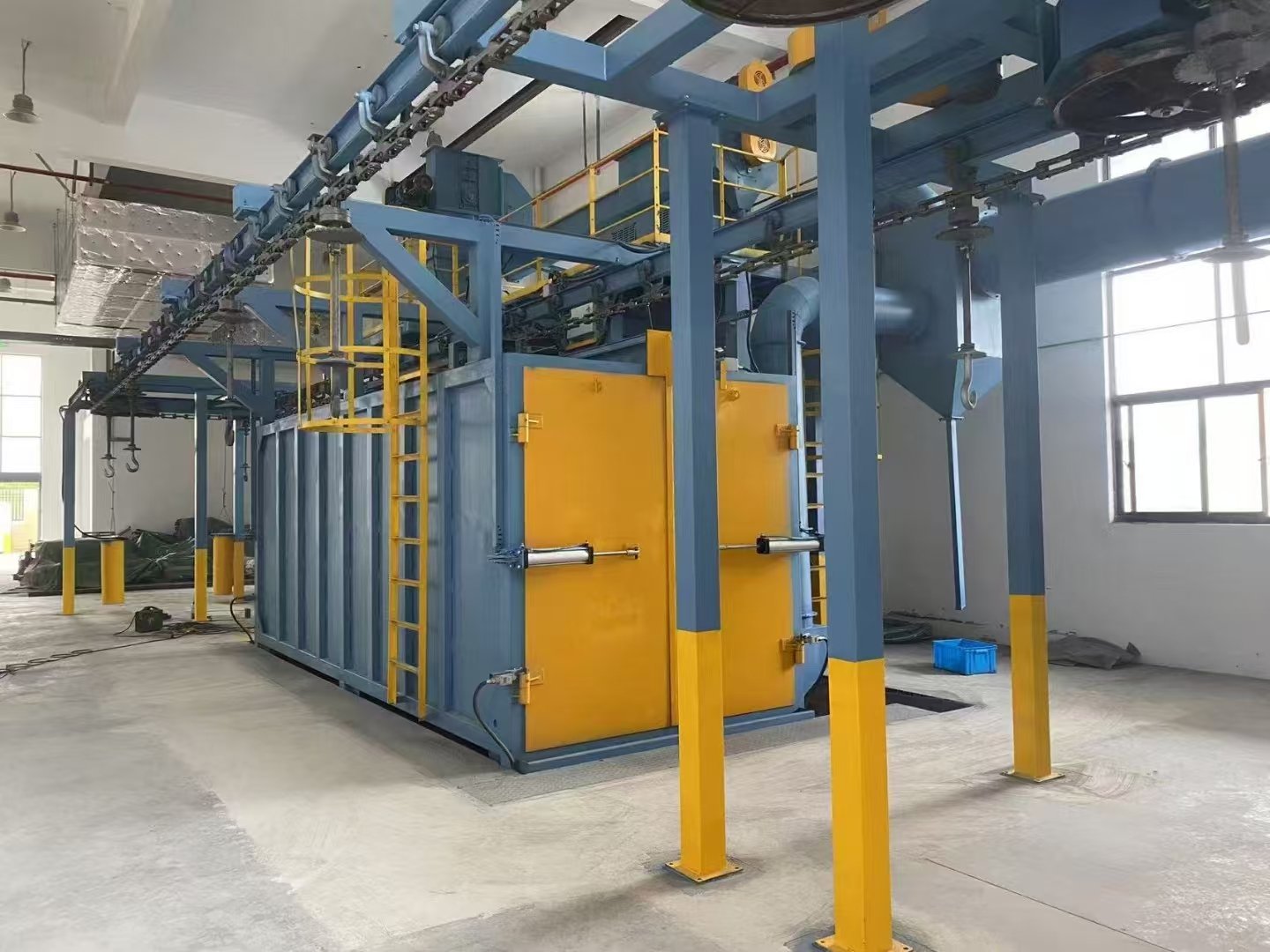
Preventive maintenance is key to avoiding costly repairs and downtime. Here are essential practices to keep your shot blasting machine in optimal condition:
| Maintenance Task | Recommended Frequency |
|---|---|
| Inspect blasting turbines | Weekly |
| Clean dust collector filters | Monthly |
| Check and tighten bolts | Monthly |
| Lubricate bearings and moving parts | Bi-weekly |
| Replace worn-out blades | As needed |
| Adjust control cage position | Quarterly |
Additional maintenance steps include:
- Regularly inspecting key components like blasting turbines, conveyors, and separators.
- Cleaning dust and abrasive residue to prevent blockages in ducts and electrical components.
- Replacing aging parts such as filters, belts, and blades before failure occurs.
- Using high-quality abrasives to minimize contamination and improve efficiency.
Conclusion

Maintaining a shot blasting machine is essential for ensuring consistent performance, reducing downtime, and lowering repair costs. Quick troubleshooting and preventive maintenance can significantly extend the lifespan of critical components. Partnering with a reliable supplier for spare parts and technical support ensures seamless operations and maximum efficiency.


