

Industrial manufacturers face increasing pressure to enhance efficiency, improve consistency, and reduce labor dependency. Traditional abrasive wheel blast systems struggle to keep pace with evolving demands, leading to inefficiencies and rising costs.
Automated abrasive wheel blast systems offer a game-changing solution, improving production speed, repeatability, and surface quality while reducing manual intervention. Companies investing in automation gain a competitive edge in precision manufacturing.
Understanding how automation can transform abrasive wheel blasting processes is essential for businesses seeking to optimize performance. Let’s explore the key factors, benefits, and innovations in this field.
Understanding Abrasive Wheel Blast Automation
Manufacturers often struggle with inconsistent surface finishing, excessive manual labor, and production bottlenecks. Without automation, achieving uniform results at high throughput becomes a challenge.
Abrasive wheel blast automation1 refers to the use of programmed systems to streamline surface treatment processes, ensuring precise and repeatable results while reducing human error and labor dependency.
Why Is Automation Important in Industrial Applications?
Automation enhances operational efficiency by reducing cycle times, minimizing waste, and improving workplace safety. Key benefits include:
| Benefit | Impact |
|---|---|
| Higher Productivity | Continuous operation with minimal downtime |
| Consistent Quality | Uniform surface finish for all parts |
| Labor Cost Savings | Reduces manual handling and skilled labor needs |
| Process Repeatability | Ensures identical results in every batch |
By addressing labor shortages and increasing production consistency, automation ensures that businesses stay competitive in today’s industrial landscape.
When Is Automation the Right Choice?
Manufacturers often wonder whether automation is suitable for their operations. Standard blasting machines serve well for small-scale tasks, but large-scale, high-precision applications demand automation.
Automation is ideal when part complexity, production targets, and quality standards exceed what manual or semi-automated systems can achieve.
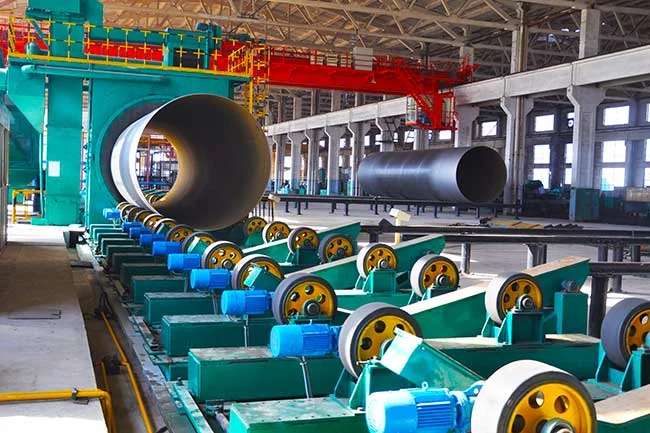
Key Considerations Before Automating
Before transitioning to automation, companies must assess critical factors:
- Part Specifications – Size, geometry, and material determine the need for customized automation.
- Production Volume – Higher throughput requirements justify automation investment.
- Validation and Compliance – Meeting in-house and regulatory standards ensures smooth adoption.
The Role of Collaboration in Achieving Optimal Solutions
Choosing the right automation solution requires close collaboration between manufacturers and equipment suppliers. A well-structured consultation process ensures that the final system meets production goals while maintaining efficiency and compliance.
On-Site Testing vs. Theoretical Models: What to Expect
Manufacturers often hesitate to automate due to uncertainty in real-world performance. Theoretical models provide insights, but real-life testing offers undeniable validation.
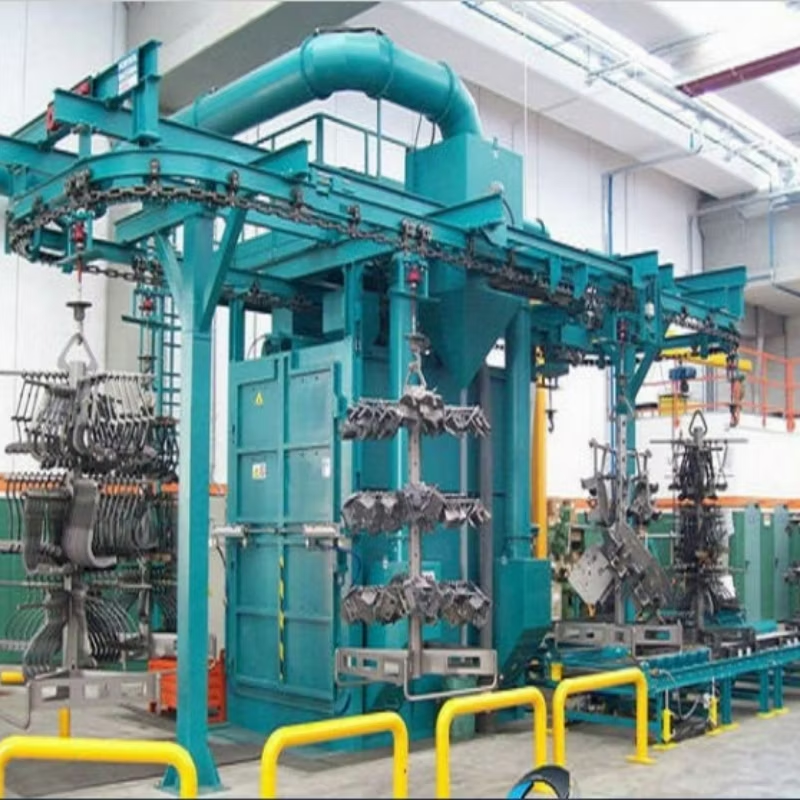
On-site testing2 in a controlled environment confirms system accuracy, efficiency, and overall performance before full-scale implementation.
Why Is Testing Crucial?
Testing at a dedicated Demonstration Laboratory enables manufacturers to:
- Evaluate blasting performance under actual operating conditions.
- Optimize parameters for part-specific processing.
- Ensure compliance with production tolerances.
| Testing Method | Advantages |
|---|---|
| Theoretical Modeling | Provides initial process expectations |
| On-Site Testing | Confirms real-world system efficiency and accuracy |
The Value of Customer Presence During Testing
Being present during testing allows customers to fine-tune processes, adjust parameters, and gain firsthand insight into system capabilities. This interactive approach ensures that the final system meets operational requirements.
Innovations in Abrasive Wheel Blast Automation
The industrial landscape is shifting toward smarter, more connected automation solutions. Traditional air blast rooms are being replaced by advanced wheel blast systems.
Emerging technologies3 like robotics, IoT integration, and digital HMI controls are revolutionizing the way automated blasting systems operate.
Key Technological Advances
- Robotics & AI – Adaptive blasting systems that adjust parameters in real-time.
- IoT-Enabled Monitoring – Remote diagnostics and predictive maintenance.
- Advanced HMI Controls – Intuitive touchscreen interfaces for seamless operation.
These innovations drive efficiency while reducing human intervention, making automation the future of abrasive blasting.
Case Study: The TB120XT Table Blast System
To address the need for larger part processing with precision automation, the TB120XT Table Blast System was developed.
Key Features:
- 120” Diameter Turntable – Handles oversized parts up to 10,000 lbs.
- Dual 15” Blast Wheels – 20 HP Direct Drive for maximum abrasive impact.
- 7” Touchscreen HMI – Provides full control over operational parameters.
| Feature | Benefit |
|---|---|
| Large Turntable | Accommodates oversized parts |
| High-Power Blast Wheels | Ensures consistent and effective cleaning |
| User-Friendly HMI | Simplifies control and monitoring |
Advantages Over Manual Blasting
- Higher Efficiency – Reduces cycle times and increases throughput.
- Lower Labor Costs – Minimizes reliance on manual operators.
- Superior Consistency – Delivers uniform results with minimal variation.
With these advantages, the TB120XT significantly enhances production efficiency and surface treatment quality.
The Empire Difference: A Customer-Centric Approach
Investing in automation requires industry expertise, structured project management, and ongoing support.
A customer-focused approach ensures that each automation project is tailored to specific needs, from initial consultation to post-installation optimization.

Structured Project Management Process:
- Initial Consultation & Project Verification – Defining project scope and goals.
- Approval Drawings & Factory Acceptance Testing (FAT) – Ensuring compliance with customer requirements.
- Installation & Training – Seamless integration into existing operations.
- Post-Installation Support – Continuous optimization for long-term success.
Collaboration at every stage ensures that automation solutions deliver maximum efficiency and ROI.
Final Thoughts: The Future of Automated Wheel Blast Equipment
The abrasive wheel blast industry is rapidly evolving toward enclosed, operator-free systems with enhanced automation capabilities.
By investing in cutting-edge automation, businesses can improve productivity, reduce costs, and ensure long-term sustainability in surface treatment operations.
Companies that embrace this shift will gain a competitive advantage, positioning themselves for future success in high-precision manufacturing.
Explore how abrasive wheel blast automation can enhance efficiency and quality in manufacturing processes. ↩
Learn about the critical role of on-site testing in validating automated systems for optimal performance. ↩
Discover the latest innovations transforming abrasive wheel blast automation and their impact on efficiency. ↩


