
Removing rust from steel profiles is a surface-preparation task. Start by checking whether corrosion has reduced the section, damaged connections or exposed cracking. Blast cleaning removes surface contamination; it does not restore lost steel thickness or establish that a structural member is fit for service.
Inspect Before Selecting the Cleaning Process
Record the incoming rust and old-coating condition, dimensions, mass, welds, holes and restricted faces. Assess oil and grease separately and remove them by a suitable pre-cleaning method. For painted steel, establish the coating hazards and containment requirements before disturbing it.
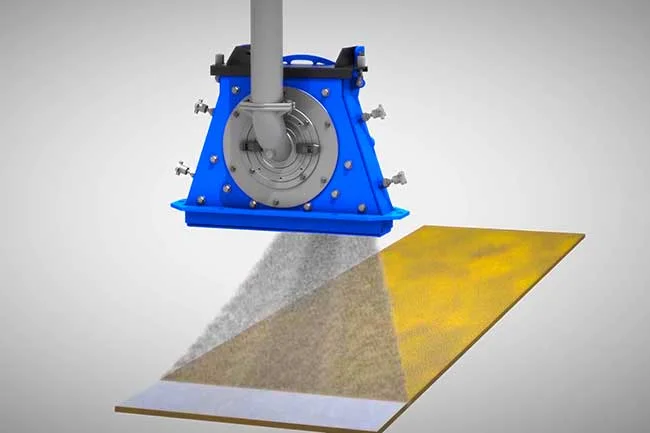
Match Handling to the Workpiece
| Workpiece condition | Route to evaluate | Key checks |
|---|---|---|
| Loose profiles and supported beams | Roller-conveyor wheel blasting | Opening height, support pitch, load distribution, exposed web and flange faces. |
| Fabricated assemblies that need suspended support | Hanger or other fixture-based handling | Total suspended mass including fixtures, rotation, spacing and shadowed areas. |
| Large or fixed structures requiring local access | Air blasting with suitable containment | Operator access, hose/nozzle duty, compressor supply, recovery and dust extraction. |
| Small robust parts that can turn without damage | Batch tumble handling | Part shape, batch and individual mass, nesting and contact tolerance; this is not a mobile process for fixed beams. |
Plan Surface Access, Not Just Machine Width
A profile can fit through an opening while still having sheltered surfaces. Review the inside of flanges, welded recesses, overlapping plates, support contacts and edges. Loading orientation, wheel arrangement or a separate treatment step may be needed. Use representative parts to qualify access rather than assuming every face receives the same exposure.
Agree the Surface Acceptance
Define the required cleanliness, profile, inspection locations and coating requirements with the purchaser. Select abrasive type and grading for the substrate and finish. Travel speed or treatment time depends on incoming condition, geometry and the selected blast package; it is not an independent guarantee of a cleaning grade.
Control the Transition to Coating
Remove dust and trapped abrasive from recesses and hollow sections. Check the prepared surface and environmental conditions before coating, then follow the coating manufacturer’s application requirements. Storage and transfer should limit recontamination and flash rust. Coating performance depends on the complete preparation and coating system.
Provide a Workpiece-Based Enquiry
Send drawings, largest and smallest envelopes, mass, product mix, incoming surface photographs, planned coating system, handling method, required production rate and available utilities. Hitech can review an appropriate equipment configuration against these inputs.
Compare plate and profile line selection criteria or review application requirements. Request a Solution.


