

Struggling with inconsistent surface finishes, rapid abrasive wear, or poor coating adhesion?
To choose the right steel grit for blasting, consider factors like grit size, hardness, substrate type, surface profile goals, and blasting equipment compatibility.
Selecting the right steel grit isn’t just a technical detail—it’s a critical decision that influences product quality, production costs, equipment life, and safety compliance. Here’s a step-by-step guide to making the smartest choice.
Why Steel Grit Matters in Blasting Operations?
Undersized grit leaves coatings vulnerable. Oversized grit damages parts. Poor grit choice = wasted time and money.
Steel grit plays a key role in abrasive blasting by efficiently cleaning surfaces, achieving desired surface profiles, and extending both coating and equipment lifespan.
Its angular structure aggressively removes rust, scale, and old coatings, while also creating the texture needed for primer and paint adhesion. Unlike softer or disposable abrasives, steel grit is reusable—often lasting hundreds of cycles—making it both effective and economical.
The right steel grit reduces blast time, improves coating performance, and minimizes equipment wear. When used correctly, it provides consistent, repeatable results across large production runs and demanding industrial conditions.
What Is Steel Grit?

Think all abrasives are created equal? Think again.
Steel grit is a hard, angular abrasive made from crushed, heat-treated steel, used for aggressive surface cleaning and profiling.
It differs from steel shot in shape and function. While steel shot is round and primarily used for peening or polishing, steel grit has sharp edges, allowing it to cut into surfaces—perfect for cleaning or roughening prior to coating.
| Feature | Steel Grit | Steel Shot |
|---|---|---|
| Shape | Angular | Spherical |
| Application | Cleaning, profiling | Peening, polishing |
| Surface Effect | Rough profile | Smooth finish |
| Use Cases | Rust removal, coating prep | Surface strengthening |
Depending on its hardness (GP, GL, GH grades), steel grit can be tailored for general cleaning or extreme applications like removing baked-on coatings or mill scale.
How Steel Grit Works in Surface Preparation
Struggling with coating adhesion even after blasting?
Steel grit’s angular shape allows it to create deep surface profiles, increasing mechanical bonding between the surface and subsequent coatings.
Its cutting action breaks through oxidation, contaminants, and previous coatings. More importantly, it creates valleys and peaks that hold primers and paints firmly in place.
This roughness is known as the “anchor profile,” and it’s crucial for coating durability—especially in automotive, marine, or oil & gas applications.
A poorly prepared surface (e.g., cleaned but too smooth) can lead to premature coating failure, while an over-profiled surface may require more primer and create uneven finishes.
Material Hardness and Surface Requirements
Using one grit for all jobs? That’s a mistake that costs time and rework.
Different substrates require different grit hardness levels to avoid damage or insufficient cleaning.
Steel grit is classified by hardness:
| Grade | Hardness (HRC) | Use Case |
|---|---|---|
| GP | 40–51 | General-purpose cleaning |
| GL | 50–60 | Balanced cutting and longevity |
| GH | >60 | Tough surface preparation (scale, epoxy, etc.) |
Use GH grit on carbon steel or heavy corrosion. For softer materials like aluminum or composites, GP or GL grit minimizes substrate damage while still cleaning effectively.
Choosing the correct hardness ensures you don’t gouge soft materials or under-blast tough surfaces.
Desired Surface Finish Quality
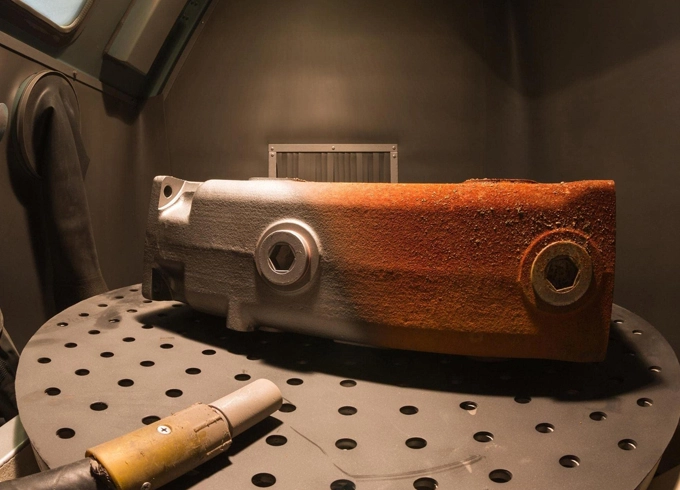
Can’t achieve the finish your customer wants?
Coarser grit (e.g., G16, G25) creates deeper surface profiles ideal for thick coatings or epoxy systems, while finer grit (G50, G80) offers smoother finishes for cosmetic or thin-film coatings.
| Grit Size | Profile Depth | Typical Use |
|---|---|---|
| G12–G25 | 4–6 mils | Rust/scale removal, epoxy prep |
| G40 | 2–3 mils | General-purpose blasting |
| G50–G80 | 1–2 mils | Cosmetic finishes, light coatings |
Using the wrong size not only wastes abrasive but can result in premature coating failure due to improper bonding.
Type of Blasting Equipment Used
Your blasting machine has limits—are you exceeding them?
Steel grit must be compatible with your blasting equipment (wheel blasting or air blasting) to perform correctly and safely.
Wheel blasting machines handle durable grit well (GP or GL) and recycle it efficiently. Harder grit (GH) is better suited for air blasting systems with precise pressure control.
Choosing the wrong grit for your equipment can lead to accelerated wear of turbine blades, nozzles, and reclaim systems.
| Equipment | Recommended Grit | Notes |
|---|---|---|
| Wheel Blaster | GP, GL | High reusability, low wear |
| Air Blaster | GH | High-impact applications, precise control |
Grit Size Chart: From Coarse to Fine
Too aggressive? Too weak? Match grit size to the job.
Steel grit is available in a wide range of sizes, from coarse G12 to fine G120, each producing different surface profiles.
| Grit Size | Mesh Size | Use Case |
|---|---|---|
| G12 | ~1.7 mm | Heavy rust, scale removal |
| G25 | ~0.7 mm | Epoxy prep |
| G40 | ~0.4 mm | General cleaning |
| G80 | ~0.2 mm | Polishing, cosmetic prep |
| G120 | ~0.1 mm | Fine surface finishing |
Visualizing these profiles helps determine which grit delivers the correct surface texture for your coating system.
How to Choose the Right Grit Grade for Your Application
Use G25 GH for thick epoxy prep. G50 GL works best for aluminum cleaning. G80 GP is ideal for cosmetic steel parts.
Think in terms of coating type, cleanliness level, and surface hardness. Adjust accordingly for optimal results.
Durability and Reusability of Steel Grit

High-quality grit pays for itself in the long run.
Steel grit can be reused 2000–3000 times if properly maintained, reducing abrasive cost and increasing efficiency.
This makes it more cost-effective than expendable abrasives like sand or slag. A premium grit maintains shape longer, cuts more consistently, and reduces machine wear.
Factors That Affect Grit Longevity
- Abrasive quality: Higher carbon and uniform hardness increase cycle life.
- Recycling system: Magnetic separators, air washers, and sieves help keep grit clean and effective.
- Contaminants: Oil, moisture, or foreign particles degrade grit faster.
Invest in a quality media recovery system and monitor recycling rates regularly.
How Steel Grit Affects Blasting Equipment Lifespan
Abrasives don’t just wear out—they wear out your machine.
Oversized or overly hard grit can damage turbines, nozzles, and reclaim systems. Using correct grit reduces downtime and repair costs.
Monitor wear parts closely. Match grit to your equipment’s capabilities. Avoid using GH in wheel blasters unless specified—this accelerates wear and raises maintenance costs.
Cost vs. Performance: Balancing Efficiency and Budget
Cheap grit costs more in the long run.
High-quality steel grit offers consistent performance, longer media life, and lower total cost of ownership—even if the upfront price is higher.
Avoid the trap of false economy. Poor-quality grit fragments quickly, increases dust load, and reduces blast efficiency.
| Metric | Low-Quality Grit | High-Quality Grit |
|---|---|---|
| Media Life | 500–800 cycles | 2000–3000 cycles |
| Cleaning Speed | Inconsistent | Stable |
| Equipment Wear | High | Moderate |
| Overall Cost | Higher long-term | Lower long-term |
Steel Grit Applications Across Industries

One grit doesn’t fit all. Choose based on your industry’s specific needs.
Automotive and Aerospace
- Lightweight, smooth finish needed
- G80–G120 grit for aluminum and titanium
- Use GH grade in air blasting for tight control
Heavy Machinery and Structural Steel
- Scale, rust, or welding slag removal
- G16–G25 with GL hardness offers balanced cutting and durability
Marine and Oil & Gas
- Requires deep profiles for protective coatings
- G25 GH grit is ideal for anchor profile formation and coating adhesion
Expert Tips for Optimal Use of Steel Grit in Blasting
Are you unknowingly using the wrong grit?
Optimize steel grit performance with proper storage, recycling, and inspection.
- Store in dry, sealed containers to prevent moisture contamination
- Inspect for grit degradation (rounding, cracking)
- Watch for signs like uneven finish, excessive dust, or clogged filters—these indicate grit issues
A simple grit audit can save thousands in labor, coatings, and repairs.
Conclusion
Choosing the right steel grit means balancing performance, cost, and compatibility. Consider substrate material, desired finish, equipment type, and abrasive quality. Test, track, and adjust as needed for best results.
Final Checklist:
- ✅ Match grit size to surface profile goal
- ✅ Choose correct hardness for material and cleaning level
- ✅ Ensure compatibility with blasting equipment
- ✅ Consider grit recyclability and durability
- ✅ Follow best practices for storage and handling


