
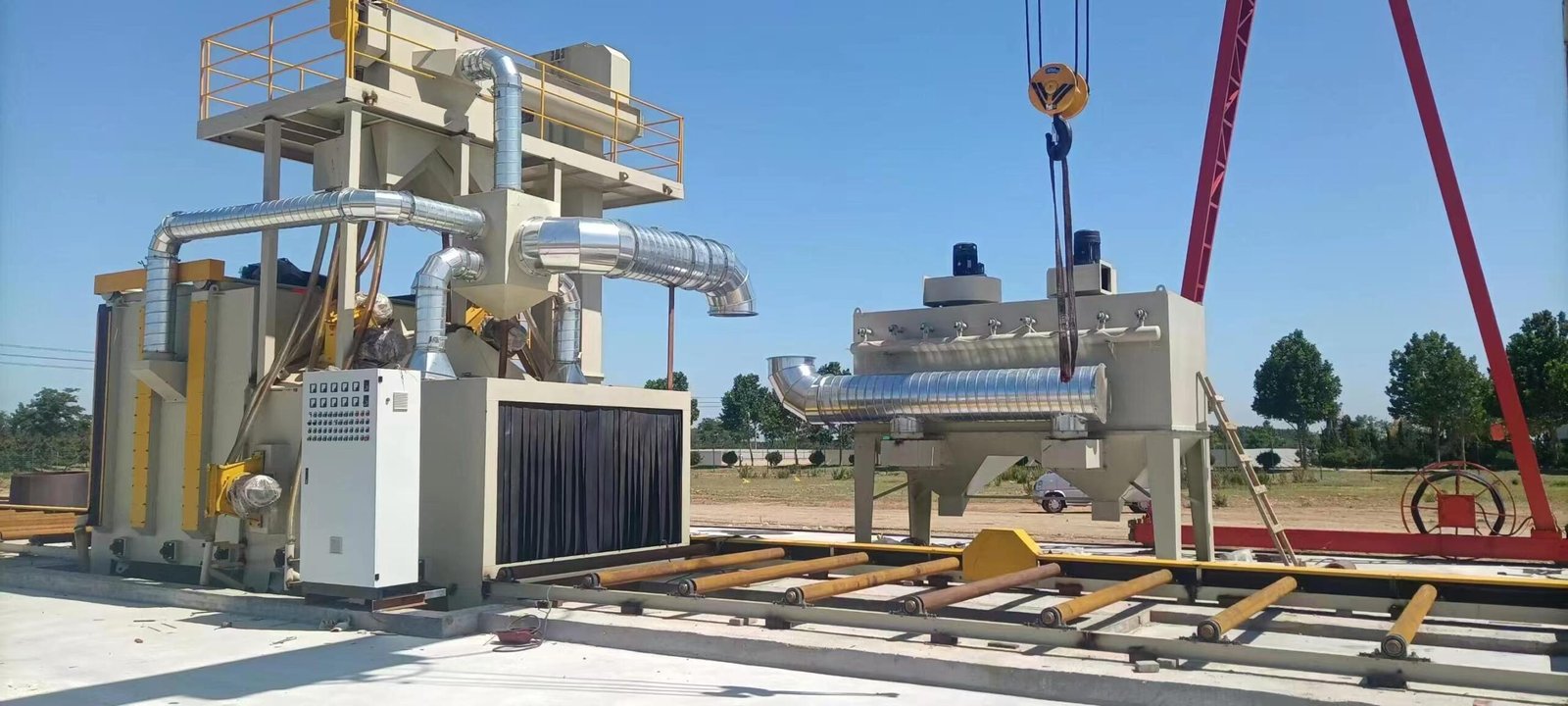
The wrong shot blasting machine can lead to inefficient cleaning, excessive maintenance, and costly downtime. Choosing the right one is crucial for improving productivity and ensuring surface treatment quality.
The best roller conveyor shot blasting machine should match your material type, production volume, and surface quality requirements. Key factors include blast wheel configuration inputs, conveyor speed, automation level, and maintenance needs.
Making the right choice requires an in-depth understanding of how different features impact your operations. Let’s break it down step by step.
What is a Roller Conveyor Shot Blasting Machine?
Roller conveyor shot blasting machines use high-speed steel shots to clean and prepare metal surfaces, improving adhesion for coatings or enhancing durability. This method is widely used in steel fabrication, construction, and automotive industries.
A roller conveyor shot blasting machine consists of a blasting chamber, high-powered blast wheels, a roller conveyor system, and a dust collection unit. Surface coverage and throughput depend on wheel arrangement, abrasive flow, conveyor speed and the workpiece mix.
These machines are ideal for treating steel plates, profiles, beams, and large metal components, offering consistent and efficient cleaning with minimal manual labor.
Key Components of a Roller Conveyor Shot Blasting Machine
| Component | Function |
|---|---|
| Blast Wheels | Propel abrasive media at high velocity to clean surfaces. |
| Roller Conveyor | Moves workpieces through the blasting chamber at controlled speeds. |
| Abrasive Recovery System | Collects and recycles used abrasive media for continuous operation. |
| Dust Collection Unit | Extracts process dust; performance depends on system sizing, filtration, maintenance and operating controls. |
| Control System | Controls specified blasting parameters; verify repeatability and throughput under the intended process conditions. |
How to Determine the Right Machine Capacity?
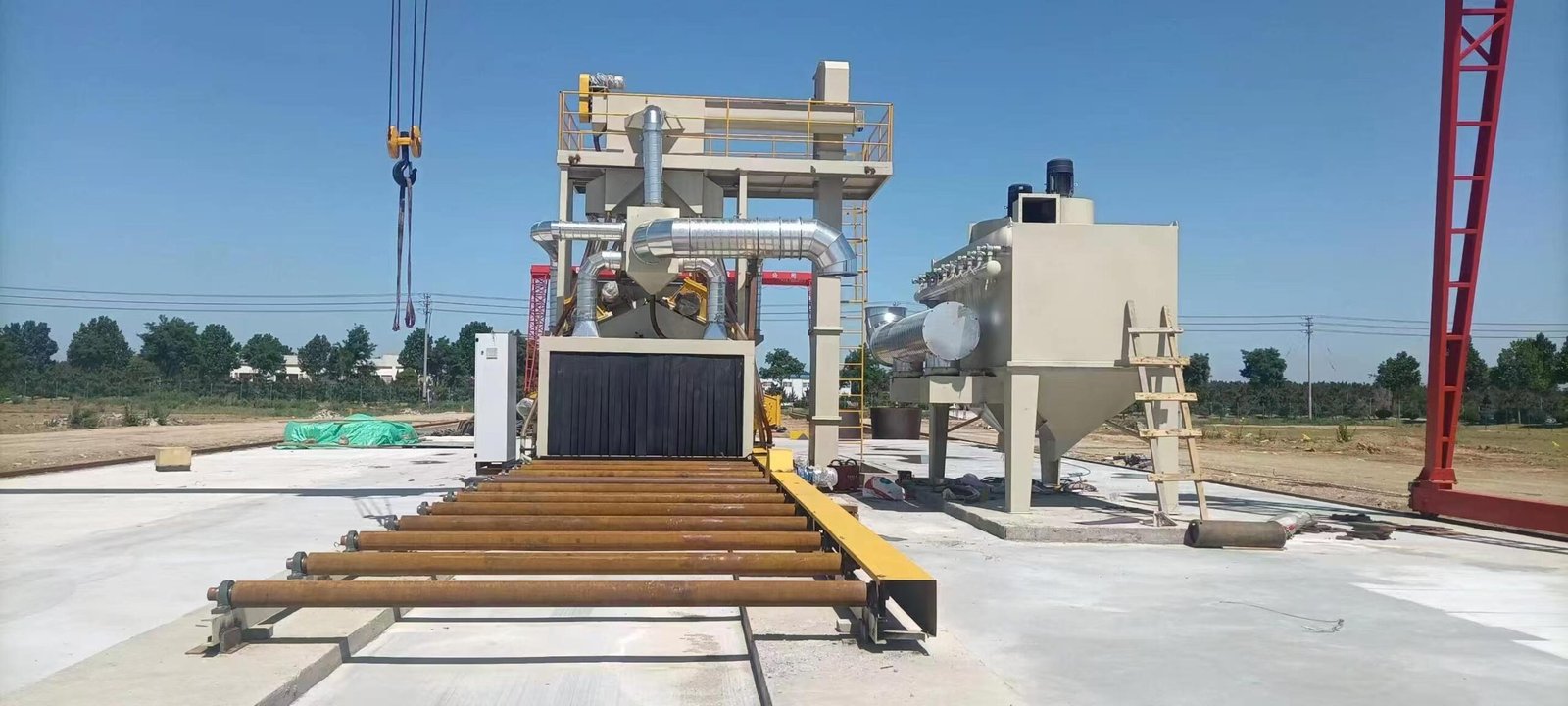
Underpowered machines struggle with thick coatings, while oversized systems increase operational costs. Finding the right balance is essential.
The right machine capacity depends on the material size, thickness, production volume, and required surface roughness. Consider conveyor speed, blast wheel power, and chamber dimensions to ensure optimal performance.
Factors Affecting Machine Capacity
- Material Type and Size – Select wheel arrangement and power from exposed surface, incoming scale, coverage and travel speed; plate mass or thickness alone does not determine power.
- Production Throughput – Meet the production target by balancing conveyor speed, blast-zone coverage, abrasive flow and loading; increasing speed alone may reduce cleaning quality.
- Surface Cleanliness Standard – For Sa 2½ or Sa 3 cleanliness requirements, validate surface acceptance on representative workpieces; power alone does not establish the result.
What Are the Key Performance Indicators?
Efficiency and quality are non-negotiable when investing in a shot blasting system.
Key performance indicators include blasting speed, energy efficiency, media consumption, surface roughness consistency, and maintenance frequency. Assess automation and monitoring against the operating plan, maintainability and verified process results.
Evaluating Performance
| KPI | Measurement Criteria |
|---|---|
| Blasting Speed | Workpieces per hour, speed adjustments |
| Energy Efficiency | Power consumption per cycle |
| Abrasive Media Usage | Media recovery rate, consumption per square meter |
| Surface Quality | Roughness measurement (Ra values) |
| Maintenance Requirements | Downtime frequency, spare parts availability |
How Does Automation Improve Efficiency?
Manual adjustments can lead to inconsistent results and higher labor costs. Properly configured automation can reduce adjustment variability and handling effort; setup, maintenance and operator checks remain necessary.
Automated roller conveyor shot blasting machines can repeat specified process settings and reduce handling time when configured for the workpiece mix and operating plan. Features like programmable logic controllers (PLCs) and real-time monitoring enhance productivity.
Advantages of Automation
- Consistent Blasting Quality – Can reduce manual adjustment variability; calibration, setup and operator verification remain necessary.
- Higher Throughput – Automated loading/unloading increases efficiency.
- Predictive Maintenance – Sensors detect wear and tear, reducing unexpected downtime.
- Remote Monitoring – Operators can track performance and adjust settings in real-time.
What Maintenance Factors Should You Consider?

Frequent breakdowns can cripple production schedules and increase operational costs. Preventive maintenance is key.
Choose a machine with easy access to wear parts, robust abrasive recovery systems, and an efficient dust collection unit to minimize maintenance downtime.
Essential Maintenance Practices
- Inspect and Replace Blast Wheel Components – Worn-out blades reduce efficiency.
- Monitor Abrasive Recycling System – Clogged filters can affect performance.
- Clean Dust Collection System – Supports dust-control performance when filters, airflow and disposal procedures are maintained.
- Check Conveyor Rollers – Misalignment can cause irregular blasting.
Conclusion
Selecting the right roller conveyor shot blasting machine depends on multiple factors, including material type, production volume, surface quality requirements, and automation level. By understanding key performance indicators and maintenance considerations, you can develop a configuration and operating plan suited to the application; long-term efficiency and cost depend on utilization, maintenance and process conditions.
Need a Machine Configuration for Your Workpiece?
Send the workpiece material, dimensions, weight, current surface condition, required cleaning result and expected throughput. Hitech can use these inputs to prepare a preliminary machine configuration.


